Amsterdam's restaurant scene has undergone a quiet revolution over the past decade. A city once known principally for Indonesian rijsttafel and Dutch stamppot is now home to some of the most inventive, ingredient-led, and internationally celebrated cooking in northern Europe. The Michelin guide has taken notice — so have food writers from Paris, London, and New York. But the city's finest dining experiences remain distinctly Dutch in character: considered, genuine, and free of the theatrical self-importance that afflicts certain Paris or London establishments. For a business dinner, a romantic evening, or a private celebration, Amsterdam's best tables offer something that is increasingly difficult to find in a world of over-designed destination restaurants: the simple sense of being genuinely well looked after.
The Dining Neighbourhoods
Understanding Amsterdam's restaurant geography is the first step to planning a truly good evening. The city is compact, but its districts have distinct characters that translate directly into the kind of dining experience each one offers.
Oud-Zuid — Elegance and Polish
The area south of the Vondelpark, centred on the Cornelis Schuytstraat and the streets around the Museumplein, is Amsterdam's most consistently polished dining neighbourhood. This is where you will find the kind of restaurant that a well-travelled European would immediately recognise: proper table settings, educated service, wine lists built around Burgundy and the natural wine producers of the Loire and Rhône, and kitchens that take seasonal sourcing seriously. The neighbourhood's clientele is prosperous and international — diplomats, financiers, cultural professionals, and the city's established creative class. A dinner in Oud-Zuid is reliably excellent and rarely disappoints.
The character of the cooking here leans toward European fine dining with Dutch inflection — classic French technique applied to North Sea fish, aged Dutch cheese in unexpected contexts, and a general attentiveness to the quality of ingredients that reflects the Netherlands' extraordinary position as one of the world's great agricultural exporters. Tasting menus are common among the area's most celebrated kitchens; à la carte dining of a high order is equally available for those who prefer to compose their own meal.
The Jordaan — Romance and Character
The Jordaan is Amsterdam's most emotionally affecting neighbourhood, and its restaurants share that quality. Narrow streets, canal-side windows, rooms that feel genuinely lived-in rather than designed — the Jordaan offers an intimacy that Oud-Zuid's more polished boulevards cannot quite replicate. For a romantic dinner, it is without question the superior choice.
The cooking in the Jordaan spans a wider range than Oud-Zuid. There are neighbourhood bistros serving straightforward modern European food to a local clientele; there are small, serious rooms where a chef-proprietor is cooking at genuinely high level; and there are Indonesian and Surinamese restaurants that reflect Amsterdam's colonial culinary history and remain among the best cooking in the city. The wine culture here is relaxed — natural wine lists, orange wines from Slovenia and Georgia, and a general openness to experimentation that suits the neighbourhood's independent spirit.
A Jordaan dinner is best treated as an event in itself rather than the prelude to another activity. Arrive early enough to walk the Negen Straatjes beforehand, find your table, order without hurry, and allow the evening to proceed at its own pace. This is precisely what the neighbourhood is designed for.
De Pijp — Eclectic, Lively, and Genuinely Cosmopolitan
De Pijp — named, apparently apocryphally, for its dense grid of narrow streets resembling the stem of a pipe — is Amsterdam's most cosmopolitan food neighbourhood. The Albert Cuyp market, which runs through the heart of the district six days a week, sets the tone: an extraordinary collection of produce, street food, and specialty ingredients from across the world, and a neighbourhood that has absorbed successive waves of immigration and turned them into culinary richness.
For a business dinner or a truly romantic occasion, De Pijp works best at its more considered end — the tighter, more personal restaurants that have emerged over the past decade alongside the neighbourhood's gentrification. The cooking here is less overtly French than Oud-Zuid and less self-consciously charming than the Jordaan; it is instead genuinely diverse and often surprising. Mediterranean-influenced kitchens sit beside Japanese-Dutch fusion, Turkish mezes, and the kind of modern vegetable cooking that has emerged from Amsterdam's strong sustainability culture.
Centrum — History, Canal Views, and Occasion Dining
Amsterdam's historic centre contains some of the city's grandest dining rooms — venues whose settings, in canal-side mansions, former bank vaults, and 17th-century merchant halls, are as important as the food itself. These are occasion restaurants: the places you choose when the setting needs to do as much work as the kitchen. The cooking at such establishments is reliable and frequently excellent, though rarely as innovative as the best small kitchens in Oud-Zuid or the Jordaan.
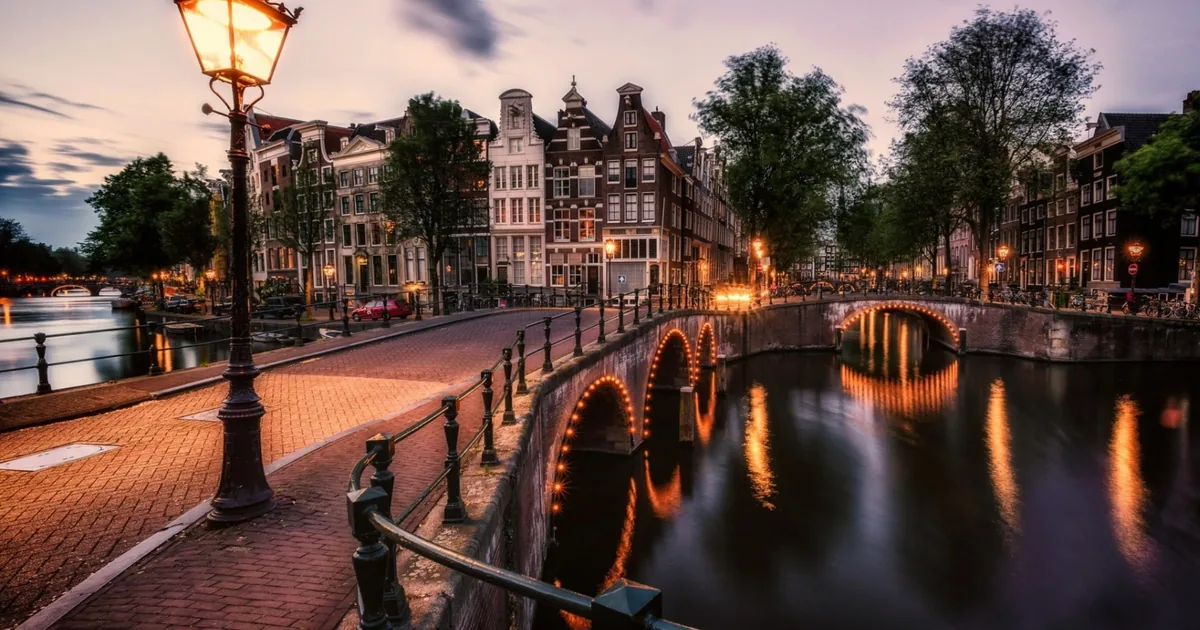
For a client entertaining international visitors — particularly those for whom Amsterdam is a new city — a Centrum restaurant with a canal view and a beautiful room is hard to improve upon. The view from a candlelit window over the Herengracht or Keizersgracht at night, with the bridge lights reflected in the still water below, is one of the genuinely beautiful dining experiences available anywhere in Europe.
Wine Culture in Amsterdam
Amsterdam's wine scene has matured significantly and is now one of the more interesting in northern Europe. The natural wine movement arrived early here — Dutch sommeliers were among the first in the continent to build lists around low-intervention producers from Jura, Loire, Beaujolais, and the emerging wine regions of Georgia and Slovenia. At the city's best restaurants, you will encounter wine directors who are knowledgeable, passionate, and genuinely interested in helping you find something unexpected and well-matched.
That said, Amsterdam's restaurants are not wine-snobbish. If you prefer a straightforward Burgundy or a familiar Bordeaux, you will find them on most serious lists. The Dutch relationship with wine is practical and pleasure-oriented rather than hierarchical. A good sommelier here will read your preferences quickly and advise accordingly without making the process feel like an examination.
Jenever — Dutch gin, the original of the spirit — is worth experiencing as an aperitif or digestif. Several of Amsterdam's restaurants maintain small but serious jenever selections, and a chilled glass of aged genever before a meal is one of the more civilised traditions the city has maintained.
Dress Codes and Social Conventions
Amsterdam does not enforce formal dress codes in the way that certain London or Paris establishments do, but the city's best restaurants reward appropriate dressing. Smart-casual — a jacket without a tie, well-chosen trousers, clean shoes — is the baseline for serious dining in Oud-Zuid or Centrum. In the Jordaan, the atmosphere is more relaxed and creative dressing fits naturally. Arriving in sportswear or very casual clothing at a Michelin-recognised restaurant will not result in refusal of entry, but it will mark you as someone who has not quite read the room.
For a business dinner, European business attire is the right choice. Amsterdam's professional class dresses well but without excessive formality — the Dutch preference is for quality over display. A well-cut suit, understated tie or open collar, and quality footwear will be entirely correct at any establishment in the city.
Punctuality matters. Dutch restaurants operate tightly managed sittings, and arriving late — particularly at tasting-menu restaurants with a single sitting — creates difficulties that good service cannot entirely resolve. If you are running late, call ahead.
Booking Tips — Securing the Table You Want
Amsterdam's most desirable tables are genuinely competitive. The city is small relative to its dining reputation, and the best rooms fill quickly — particularly at weekends and during the spring and summer months when tourism and business travel peak simultaneously.
For a weekend dinner at a serious restaurant in Oud-Zuid or the Jordaan, four to six weeks advance booking is the reliable standard. Tasting-menu rooms at the recognised level may require more. Mid-week bookings are considerably more accessible — many excellent kitchens have Thursday and Tuesday tables available with one to two weeks notice.
Calling rather than booking online has a meaningful success rate at Amsterdam's smaller restaurants, which often hold back a proportion of tables for telephone enquiries or rely on older booking systems that are not fully reflected online. If the online availability calendar shows nothing, a polite call remains worthwhile.
Amsterdam restaurants are generally good about dietary requirements, but these should be communicated at the time of booking rather than upon arrival. Kitchens that build their menus around specific seasonal ingredients need advance notice to make meaningful substitutions.
Tipping in the Netherlands
The tipping culture in the Netherlands is notably different from North America and closer to the approach taken in most of continental Europe. Dutch restaurant staff are paid proper wages — the concept of tips as wage supplement does not apply. Tipping is therefore a genuine expression of satisfaction rather than an obligation, and amounts are correspondingly more modest.
At a fine dining establishment, rounding up to the nearest round number or leaving approximately five to ten percent for excellent service is the accepted practice. Leaving nothing at a restaurant that has served you well is unusual and noticed; leaving twenty percent, as one might in New York, is generous to the point of eccentricity. The Dutch find excessive tipping slightly awkward — it signals unfamiliarity with local practice rather than sophisticated generosity.
Tipping in cash is appreciated even when the bill is paid by card. Many Dutch servers prefer to receive tips directly rather than via terminal, as cash tips are immediately theirs and avoid any ambiguity about how gratuities are distributed.
The finest table in Amsterdam is not simply a meal — it is two or three hours in one of Europe's most beautiful cities, looked after by people who take genuine pride in hospitality. The occasion repays being approached with the same seriousness.
Making the Most of a Dining Evening in Amsterdam
The Dutch evening rhythm runs slightly earlier than in Paris or Madrid. Dinner service typically begins between 18:00 and 18:30, with peak tables filled by 19:30. Booking for 18:30 allows a relaxed meal without the slight pressure of a late second sitting. The most unhurried experience is a table at 18:00 or 18:30 at a kitchen with a generous sitting duration — many of Amsterdam's best restaurants allocate two and a half to three hours per table for an evening meal.
An Amsterdam dining evening is at its best when it extends beyond the restaurant itself. A pre-dinner walk through the canal streets — particularly along the Herengracht or Prinsengracht in the golden hour before sunset — sets the right mood. After dinner, a drink at a brown cafe in the Jordaan or a cocktail bar in the Centrum provides a natural continuation. The city's streets are safe and beautiful late into the evening, and walking between venues is one of the genuine pleasures of spending time here.