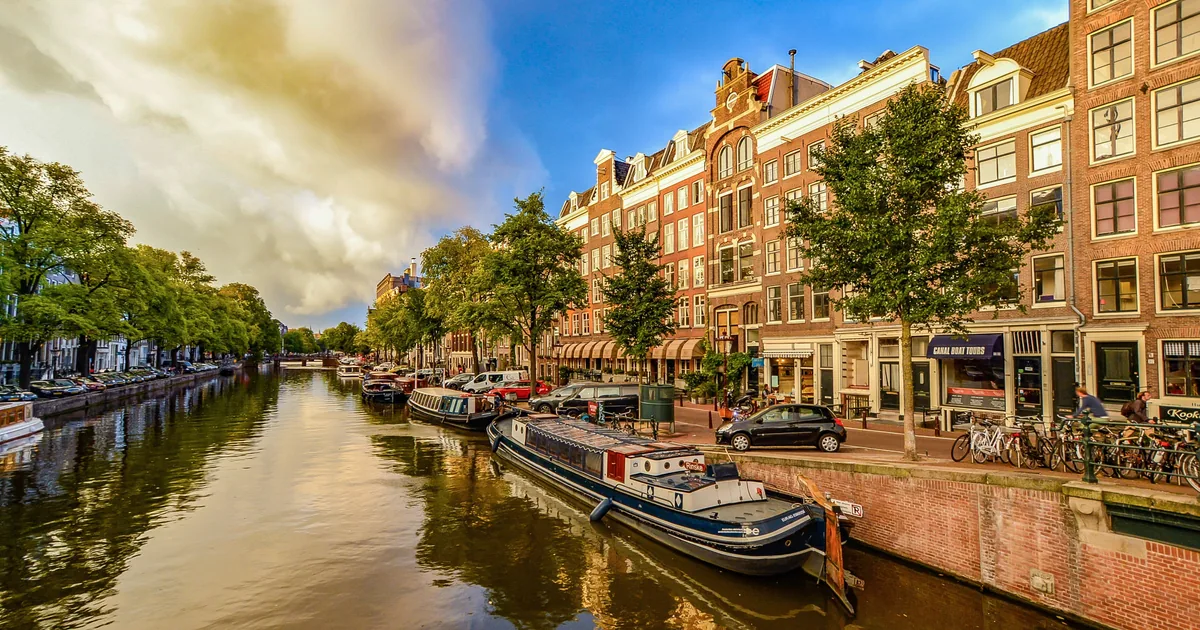
There is a moment in mid-April when Amsterdam becomes, quite suddenly, one of the most beautiful cities in Europe. The canal trees — the American elm and the horse chestnut that line the Herengracht and Prinsengracht — come into full green leaf almost overnight. The light, which in February is flat and grey, turns soft and golden. The terraces that have been closed since October open their doors, and the city's residents, famously pragmatic about weather, occupy every available outdoor chair at the first hint of warmth. For a visitor arriving in April or May, the timing could hardly be better.
The Tulip Season — Keukenhof and Beyond
No guide to Amsterdam in spring is complete without an honest account of Keukenhof — the 32-hectare bulb garden located in Lisse, approximately 35 kilometres south-west of the city in the heart of the Dutch flower-growing region. Keukenhof opens in late March and closes in mid-May, and during that window it is one of the most visited tourist attractions in the Netherlands, receiving in excess of a million visitors in a typical season.
The numbers might deter, but Keukenhof earns its reputation. The scale of the planting is genuinely extraordinary — more than seven million bulbs are installed each autumn, and the spring display spans not just tulips but narcissi, hyacinths, alliums, and a vast range of specialty bulb varieties that most visitors have never encountered. The garden is organised into themed sections, each designed by a different bulb grower, and the result is a landscape that is simultaneously horticultural spectacle and design exercise.
For the best experience at Keukenhof, visit on a weekday and arrive as close to opening time as possible. The garden opens at 8:00, and the two hours before 10:00 offer dramatically lower crowds, better light for photography, and a genuine sense of space that the afternoon crush does not allow. If you arrive mid-morning on a Saturday in mid-April, the experience is appreciably different — and appreciably worse.
Beyond Keukenhof itself, the surrounding bulb fields — the bollenstreek — are worth seeing in their own right. The famous parallel rows of solid-colour tulips stretching to the horizon in pinks, reds, purples, and yellows are a Dutch landscape phenomenon with no real equivalent anywhere else in the world. Cycling through the bollenstreek on a clear April morning is one of the genuinely memorable things Amsterdam makes possible.
Canal Life in Spring
Amsterdam's canals are at their most inviting in spring. The water level is stable, the tree canopies are in fresh leaf, and the houseboats — of which there are more than 2,500 on the city's waterways — come to life with flower boxes, bicycles chained to railings, and the general domesticity that makes Amsterdam's canals feel inhabited rather than merely decorative.
Canal boat culture in Amsterdam spans a significant range of experiences. At the most casual end are the open electric boats that can be hired without a licence and navigated independently through the canal ring — a genuinely enjoyable way to spend an afternoon, particularly for those who want to move at their own pace and stop where the mood takes them. At the more formal end, private dinner boats and champagne cruises offer a structured evening on the water with catering and a guided route.
For the spring visitor, the informal electric boat hire is arguably the better choice. The pleasure of navigating the Keizersgracht under the plane trees in late afternoon light, passing under the city's 1,500 stone bridges, and finding a quiet backwater to moor for a picnic is specific to Amsterdam and not easily replicated in any other European city. The canals are navigable by novices — they are calm, relatively narrow, and the rules are simple — and the sense of being on the water in the middle of a major city, surrounded by 17th-century architecture, is consistently surprising even for those who have visited before.
Outdoor Terraces — The Opening of the Season
The opening of Amsterdam's outdoor terraces in March and April is a civic event of genuine significance. Amsterdammers are, by temperament and constitution, outdoor people who find indoor-only living during the warmer months faintly oppressive. The moment the temperature reaches double digits and the sun comes out, the terraces fill — often with people in varying degrees of optimistic underdress relative to the actual temperature.
The best terrace culture in the city is found in three areas. The Vondelpark, Amsterdam's principal city park, has a cluster of pavilion cafes and park terraces along its main path where the afternoon sun is excellent and the people-watching comprehensive. The Leidseplein and Rembrandtplein squares — the city's main entertainment hubs — have large, lively terraces that suit an afternoon beer or a morning coffee before the evening crowd arrives. And the smaller, more neighbourhood-oriented terraces of the Jordaan and De Pijp are, at their best, exactly what a spring afternoon in Amsterdam should feel like: unhurried, canal-adjacent, and entirely pleasant.
Dutch terrace heaters — the tall gas patio heaters that extend the viable season by at least four weeks in either direction — are ubiquitous, and most good terraces have them positioned thoughtfully enough that an April evening is entirely comfortable even when the temperature drops after sunset.
King's Day — 27 April in Amsterdam
King's Day, or Koningsdag, is the national birthday celebration of the Dutch monarch, and in Amsterdam it is one of the most spectacular single-day events of the European calendar. On 27 April, the entire city transforms: the streets are pedestrianised, the canals fill with decorated boats, and an estimated 800,000 people descend on Amsterdam from across the Netherlands and beyond. The city turns orange — the national colour, derived from the House of Orange — and the atmosphere combines the energy of a music festival with the warmth of a neighbourhood street party.
The vrijmarkt — the free market — is one of Koningsdag's defining traditions. On King's Day, every Dutch citizen has the right to sell goods on the street without a permit, and the result is an extraordinary citywide flea market in which everything from vinyl records to vintage clothing to home-baked cakes changes hands on pavements, bridges, and canal boats. For the visitor with a good eye and the patience to browse, the vrijmarkt is a genuinely interesting cultural experience and one of the few contexts in Amsterdam where finding something unexpected at an unexpected price is genuinely possible.
King's Day requires planning. Accommodation prices rise significantly in the weeks before and after 27 April, and the city's most central areas are almost impossible to navigate by car or taxi. The smart approach is to position yourself in a central neighbourhood on the night of 26 April, so that the day unfolds around you rather than requiring you to fight your way in from the periphery. Book accommodation and restaurant reservations for King's Eve (26 April) and King's Day itself many weeks in advance.
King's Day in Amsterdam is not something you watch. It is something you participate in. The orange sea of people on the Prinsengracht, the music from every bridge, the boats five abreast on the canal — it is, for a single day, one of Europe's most joyful places to be.
Light, Weather, and What to Pack
Amsterdam's spring weather is one of those subjects that rewards honest treatment rather than promotional optimism. April is genuinely changeable — temperatures ranging from 7°C in early April to 15°C by month's end, with rainfall that can arrive quickly and thoroughly. May is more reliably pleasant, with temperatures typically reaching 18°C to 20°C on the warmest days, but even May can deliver a cold, wet week with little warning.
The Dutch approach to this meteorological variability is instructive: they simply dress in layers and carry a compact waterproof, and they do not allow weather to determine whether or not to cycle, sit outside, or generally go about their day. The visitor who arrives prepared for variability — and who does not cancel outdoor plans at the first grey cloud — will have a considerably better time than the one who stakes everything on sunshine.
The compensating quality of Amsterdam's changeable spring light is one of the genuine pleasures of visiting in April and May. The particular atmospheric conditions that drove Dutch Golden Age landscape painters — the fast-moving clouds, the sudden shafts of clear light across flat canal water, the extraordinary quality of the sky at dusk — are not a myth or an artistic convention. They are real, and they are at their most dramatic in spring. On a day of variable weather in the Jordaan in April, the city can shift from moody grey to golden and back again within the hour, and the effect on the canal streets is consistently extraordinary.
Packing for Amsterdam in spring: a packable waterproof shell (not an umbrella, which is difficult to manage on the windy canals), comfortable walking shoes that can handle cobblestones, light layers that can be added or removed as temperatures shift, and at least one smart evening outfit for the restaurants. Comfortable, flat-soled shoes are genuinely important — Amsterdam's cobblestones are beautiful and hard on heels.
Why Spring Is Amsterdam's Best Season
The case for spring as Amsterdam's most rewarding visiting season rests on several converging factors. The tourist volumes of July and August — when the city's most central areas can feel genuinely overcrowded — have not yet arrived, but the city is fully active and at its most beautiful. The cultural programme is strong: the spring season sees exhibitions open at the Rijksmuseum, the Van Gogh Museum, and the Stedelijk, and the concert halls and theatres are in full swing. The light is extraordinary. The outdoor infrastructure — terraces, canal boats, park pavilions — is open. And the single specific event of King's Day makes an April visit to Amsterdam something that summer travel simply cannot match.
May extends the advantages of April while adding warmth and, in the final weeks of the month, the beginning of the long northern European evenings that peak at midsummer. By late May, it is still light at 21:30, and the canal streets in that extended golden dusk are as beautiful as the city gets at any point in the year.